
Why is there a link to review sites on the Negative Review Page?
Ta treść nie jest jeszcze dostępna w Twoim języku.
The Review System helps you collect more reviews and gives you the chance to resolve issues before they go public. To keep this within the law, every guest must be able to post a public review, including guests who left a low rating. That’s why the negative review page always includes a link to your review sites.
Why is this required?
Consumer protection laws in the EU, the UK and the US ban “review gating”, meaning asking only satisfied customers to leave public reviews, or preventing unhappy customers from doing so. Regulators treat this as misleading, because the public rating no longer reflects guests’ real experience.
European Union: Directive (EU) 2019/2161 bans manipulating consumer reviews, “such as publishing only positive reviews and deleting the negative ones.”
United Kingdom: the CMA guidance on fake reviews, issued under the DMCC Act 2024, lists “encouraging just those who are satisfied to leave reviews” as misleading.
United States: the FTC Endorsement Guides say inviting only happy customers to post reviews may be unfair or deceptive.
Most review sites have similar rules in their own policies.
How does the Review System stay compliant?
A review request email is sent to all eligible guests, not only those expected to be happy.
Guests who rate at or above your positive rating threshold are redirected to your review sites.
Guests who rate below the threshold land on the negative review page. There they can send their feedback directly to you, or use the link to leave a public review.
This way you still get the first chance to respond to an unhappy guest, and no one is prevented from sharing their opinion.
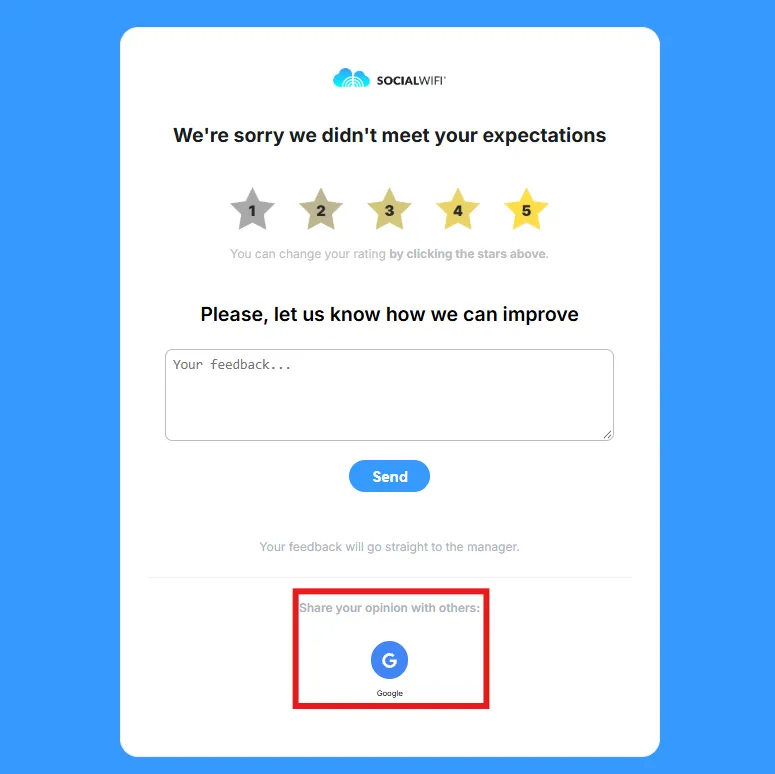
The example image above shows what the negative review page could look like when using Google as the external review system.